
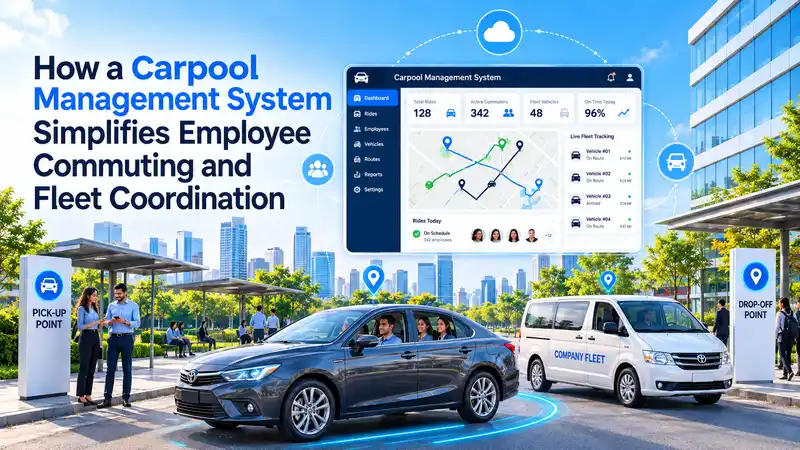
Picture your admin team juggling two separate headaches every single day. One spreadsheet tracks carpool requests, and another tracks fleet vehicles. Neither system talks to the other, so nothing lines up cleanly. That gap creates confusion for employees and extra work for HR. A reliable and smart carpool management system closes that gap in one place. It brings ride matching and fleet visibility into a single dashboard. Employees get one app for every commute option available to them. Admins get one view instead of chasing updates across scattered tools. This shift matters more as commute patterns keep changing constantly.
Fuel costs and parking pressure keep pushing companies toward shared rides. Many teams already lean on workplace carpooling to ease that pressure. At the same time, fleet vehicles still need proper coordination. Running both sides through separate tools slows everyone down eventually. This blog breaks down how one connected platform handles both sides. You will see the features that simplify commuting for employees daily. You will also see what strengthens fleet coordination for your team. By the end, you will know exactly what to look for.
Why Companies Are Rethinking Employee Commuting And Fleet Coordination
Commute operations used to run on separate systems for years. That approach worked when schedules were predictable and offices were single site. Today, most companies deal with a very different reality.
The Cost Of Running Commute And Fleet Operations Separately
Two disconnected systems create duplicate work for admin teams. Someone has to manually cross check carpool data against fleet schedules. This slows down decisions and increases the chance of errors. Separate reporting processes make matters worse over time. Pulling one combined picture takes hours instead of minutes.
Rising Employee Expectations Around Commute Convenience
Employees now expect commute options similar to consumer apps they use daily. They want live updates, easy booking, and quick ride changes. A clunky or outdated experience frustrates them fast. Companies offering smooth employee commuting tools see stronger daily participation. Convenience directly affects whether employees actually use the program.
Pressure To Track And Reduce Commute Emissions
Sustainability reporting has become an essential requirement for many organizations. Commute emissions fall under broader environmental disclosure requirements. Companies need accurate data on shared rides and fleet usage. A connected system captures this data automatically. Manual tracking across separate tools makes accuracy far harder to achieve.
Hybrid Work Has Made Commute Patterns Unpredictable
Fewer employees follow a fixed five day office schedule now. Commute needs shift week to week, sometimes day to day. Static transport plans struggle to keep up with this change. A flexible system adjusts routes and ride matches in real time. This flexibility matters far more than it used to.
What A Carpool Management System Actually Solves
Understanding the problem is one thing, understanding the fix is another. Here is what a well built platform actually changes for you.
Bringing Ride Matching And Fleet Data Into One Place
Instead of two disconnected tools, everything lives on one platform. Ride requests, fleet schedules, and driver availability sit side by side. This single view removes the guesswork from daily coordination.
Reducing Manual Coordination Work For Admin Teams
Admins spend less time manually matching riders and vehicles. The system handles matching based on route, schedule, and availability. This frees up time for higher value planning work.
Giving Employees One App For Every Commute Option
Employees no longer need separate apps for carpooling and shuttle rides. One app shows every available option based on their location. This simplicity drives higher adoption across the organization.
Turning Scattered Commute Data Into Usable Reports
Every trip, whether carpool or fleet, gets logged automatically. This data feeds directly into cost and sustainability reports. Admins get clear insights without pulling data from multiple sources.
Core Features That Simplify Employee Commuting
Employee facing features determine whether a program actually gets used. These are the features that matter most for daily commuting.
Smart Ride Matching Based On Route And Schedule
Good ride matching software connects employees with similar routes automatically. It factors in commute times, pickup points, and daily schedules. This removes the manual effort of finding a compatible ride partner.
Real Time Trip Updates And Notifications
Employees want to know exactly when their ride is arriving. Live updates reduce uncertainty and cut down on missed pickups. Notifications also alert employees to any last minute changes.
Flexible Vehicle Options For Different Employee Needs
Not everyone commutes the same way or drives the same vehicle. Some employees ride two wheelers, while others prefer four wheeler rides. Female only ride options address specific safety preferences too.
Safety Tools Like SOS And Verified Onboarding
Safety features build trust in any carpool matching system. SOS buttons give employees quick access to help if needed. Verified onboarding through official work email keeps the platform secure.
Core Features That Strengthen Fleet Coordination
Fleet coordination features focus on the operational side of transport. These features give admins control over vehicles, drivers, and schedules.
Centralized Vehicle And Driver Tracking
Strong fleet coordination software shows every vehicle location in real time. Admins can see which drivers are active and available. This visibility helps resolve issues before they affect employees.
Automated Route And Schedule Adjustments
When an employee’s schedule changes, routes should update automatically. Manual route editing wastes time and increases the risk of mistakes. Automation keeps fleet operations aligned with actual commute needs.
Dispatch And Ride Approval Controls For Admins
Admins often need to approve or reject specific ride requests. Dispatch controls give them that authority within the platform. This balance keeps oversight in place without slowing down employees.
Billing And Compliance Documentation
Fleet operations generate a lot of billing and compliance data. Automated documentation reduces manual paperwork for finance and HR teams. It also keeps records ready for audits whenever they happen.
How Carpooling And Fleet Coordination Work Together
The real advantage shows up when both sides share one system. Separate tools force admins to connect the dots manually every day.
One Dashboard For Both Peer Rides And Company Vehicles
A single dashboard displays carpool activity and fleet activity together. Admins do not need to switch between platforms to see the full picture. This unified view saves time and reduces oversight gaps.
Balancing Employee Choice With Company Oversight
Employees still get flexibility in choosing their preferred ride option. At the same time, admins retain visibility and approval where needed. This balance keeps the program both flexible and controlled.
Handling Multi Office And Multi Shift Coordination
Large companies often manage multiple offices and overlapping shifts. A connected system coordinates carpooling and fleet vehicles across all of them. This scalability becomes essential as a company grows.
Example: A Mid Size Company Cutting Commute Chaos
Consider a company with three offices and a mixed shift workforce. Before adopting a connected platform, HR managed carpooling through spreadsheets. Fleet vehicles were tracked separately through a different vendor tool.
Employees often received conflicting pickup information across the two systems. After switching to one connected platform, ride matching became automatic. Fleet vehicles and carpools appeared together in a single admin view.
Within a few months, missed pickups dropped noticeably across all offices. Admin teams also reported spending far less time on manual coordination. This kind of outcome reflects why companies are consolidating their tools.
Benefits Of Combining Commuting And Fleet Coordination
Bringing both sides together creates benefits beyond daily convenience. These benefits touch cost, visibility, retention, and sustainability goals.
Lower Operational And Transportation Costs
Fewer solo drives and better fleet utilization reduce overall costs. Shared rides cut fuel expenses and reduce parking demand. Better fleet planning also reduces unnecessary vehicle downtime.
Better Visibility For HR And Admin Teams
One dashboard means one source of truth for commute data. HR teams can pull reports without cross referencing multiple tools. This visibility supports faster and more informed decision making.
Improved Employee Satisfaction And Retention
A smooth commute experience reduces daily stress for employees. Less stress contributes to better focus and higher job satisfaction. Over time, this can support stronger employee retention numbers.
Stronger Sustainability And ESG Reporting
Combined data makes emissions reporting far more accurate. Companies can track the environmental impact of carpools and fleet trips together. This supports broader corporate transportation sustainability goals.
What To Look For In A Carpool Management System
Choosing the right platform requires a clear evaluation process. Use this checklist to compare vendors and avoid costly mistakes.
- Accurate ride matching based on route and schedule
- Real time fleet and vehicle tracking capabilities
- Support for multiple offices and shift patterns
- Built in safety tools like SOS alerts
- Integration with existing HR and payroll systems
- Detailed reporting for cost and sustainability tracking
- Scalable architecture that grows with your company
- Reliable vendor support and regular platform updates
Questions To Ask Before You Choose A Platform
Red Flags That Signal A Weak Platform
Watch out for platforms with no fleet integration options. Be cautious of vendors who cannot explain security practices clearly. Avoid tools that require excessive manual work for basic tasks.
Signs A Platform Will Scale With You
A scalable platform supports growing employee counts without added complexity. It should handle new office locations without a full system overhaul. Look for vendors with a clear roadmap for future updates.
The Future Of Commute And Fleet Coordination Technology
Commute technology continues to evolve alongside changing work patterns. Understanding these shifts helps you choose a platform built for tomorrow.
Unified Platforms Replacing Point Solutions
Standalone carpooling apps and separate fleet tools are losing ground. Companies increasingly prefer employee transportation solutions that cover both needs. Purpose built corporate carpooling platforms are replacing generic consumer apps. This shift reduces tool sprawl and simplifies vendor management.
Greater Reliance On Automation And Real Time Data
Manual scheduling is giving way to automated, data driven coordination. Real time data helps platforms adjust instantly to daily changes. This reduces errors and improves the overall commute experience.
Growing Focus On Compliance Ready Reporting
Regulatory requirements around emissions and safety continue to expand. Platforms built for compliance reporting save companies significant time. This focus will likely shape vendor selection going forward.
Conclusion
Running carpooling and fleet coordination as separate systems creates real friction. Admin teams lose time cross checking data across disconnected tools. Employees deal with inconsistent updates and confusing commute options. A connected carpool management system removes that friction entirely. It brings ride matching, fleet tracking, and reporting into one place. Employees get a simple app for every commute option available. Admins get full visibility without juggling multiple platforms daily. The result is a smoother experience for everyone involved. Click here see more details.